


Apply for funding
There are no more open calls planned for the remaining project period ending in 2026. Future open calls will be published on the KIOS website under the Apply for Funding page.
The Grants of the Haki Ni Yetu project were meant for community-based organisations and other grassroots civil society groups in rural Kenya, operating outside Nairobi or in informal settlements in Kenya.
We provided grants for human rights work in two categories: Rights, Governance and Accountability Grants for more experienced civil society actors and Civic Action and Community Empowerment Grants, tailored for community-based organisations (CBO) or other grassroot civil society groups.
The Haki Ni Yetu project organised a total of five calls for Grants during the project, two for Rights, Governance and Accountability Grants and three for Civic Action and Community Empowerment Grants. The calls were a success, and we received over 1200 applications. Through the calls the Haki Ni Yetu project was able to award a total of 66 Grants and support organisations working on human rights in Kenya.
There are no more open calls planned for the remaining project period ending in 2026.
Women- and youth-led organisations and civil society groups led by marginalised groups themselves were particularly encouraged to apply for funding. Over 90% of the financial support was awarded to such civil society groups.
The grants schemes were part of the EU-funded project Haki Ni Yetu.
Rights, Governance and Accountability Grants
Under the Rights, Governance and Accountability Grants, Haki Ni Yetu targeted community-based organisations (CBOs) in Kenya with established structures and a track record in defending human rights. The consortium organised two open calls, that received almost 800 applications. In total, 22 grants were awarded to organisations working on human rights across Kenya from Turkana and Marsabit, to Busia, Homa Bay, Garissa and Kwale, in 21 counties.
Some details and results of the Large Grants
Total number of grants under the core themes addressed by the project:
- Democracy and Rule of Law – 6 grants
- Gender Equality and Non-discrimination – 9 grants
- Business and Human Rights – 7 grants
You can read more about the themes under the project page: https://kios.fi/en/haki-ni-yetu/project/
First grants were awarded in June 2024, and implementation started in July 2024. The last grants continued implementation until August 2026.
As of January 2026, under this grant scheme, the Haki Ni Yetu supported grantees had organised over 190 trainings on human rights, trained 158 civil society organisations, reached over 5100 rights-holders and engaged a total of 660 duty-bearers.
Funding was either project-based and/or core support for strategic organisational capacity-building. KIOS provided mentoring and coaching support to the awarded grantees throughout the grant implementation period.
An evaluation team evaluated the proposals according to pre-established criteria and decisions about grants were made by the Large Grants Committee (KIOS Board of Directors).
Grant Details:
- Amount: 15,000-60,000 euros per grant
- Duration: Up to 12 months
There will be no more open calls for this Grant scheme. For any future open calls, see https://kios.fi/en/apply/
Results and success stories from Grantees are shared here: https://kios.fi/en/tag/haki-ni-yetu/
Civic Action and Community Empowerment Grants (CACEG)
Civic Action and Community Empowerment Grants (CACEG) were tailored low-threshold funding to small community-based organisations (CBOs) or other grassroot civil society groups in Kenya. Through our Grant calls we received 404 applications through 3 grant calls (note calls combined different counties) and have been able to provide funding for 44 projects for human rights work at grassroots in Busia, Embu, Isiolo, Kakamega, Kericho, Kilifi, Kirinyaga, Kisii, Kwale, Laikipia, Migori, Narok, Siaya, Taita-Taveta and Turkana counties. The grants ranged from 500 to 4000 euros, and the implementation period was mainly 3-6 months.
Grant activities under the CACEG Grant scheme were for example events, group action, training and capacity-building, advocacy or community awareness-raising. Institutional capacity development components could also be considered and integrated as part of the overall grant. The selected organisations worked on grassroot level for example on social audits, prevention of gender-based violence, advancing women’s rights in the mining sector, engaging youth in human rights work, land rights and environmental issues and business and human rights issues.
Altogether 3 grant calls were organised. The first one in July 2024 for Isiolo and Migori, where organisations were asked to first submit an Expression of Interest, followed by full proposal phase for selected organisations. The second call was organised as an open call for proposals targeting Busia, Embu, Kakamega, Kilifi, Kirinyaga, Kwale, Siaya and Taita-Taveta counties in December 2024. The third call was organised as a restricted call targeting organisations in Bungoma, Kericho, Laikipia, Narok and Turkana counties that had previously participated in the Training and Capacity Building Workshops organised by the Haki Ni Yetu project in these counties.
After each call the selected shortlisted proposals went into the Due Diligence phase. After that the final projects were selected for co-creation phase. The final grant decisions were made by an independent ‘Small Grants Committee’ following a transparent process and procedure.
Haki Ni Yetu provided mentoring and coaching support to the awarded grantees throughout the grant implementation period.
There will be no more open calls for this Grant scheme. For any future open calls, see https://kios.fi/en/apply/.
Results and success stories from Grantees are shared here: https://kios.fi/en/tag/haki-ni-yetu/
News and Impact Stories

From Fragmentation to Collective Action: How MUHURI Is Strengthening Community-Led Human Rights Protection in Garissa and Tana River
Across Garissa and Tana River Counties in Kenya, Muslims for Human Rights (MUHURI) is supporting communities to move from fragmented…

Beyond the Screen: How Kokotoni Communities in Kilifi County Are Turning Stories into Action
In Kokotoni, Kilifi County in the Kenyan coast, residents are navigating the severe environmental and social challenges associated with mining…
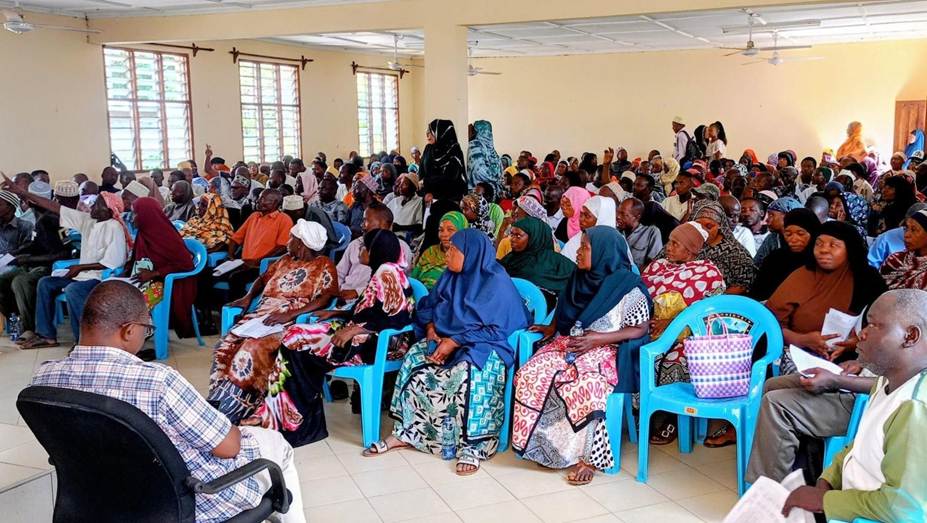
A Safe Place to Heal: How Community Voices Secured Protection for Survivors of Gender-Based Violence in Kwale County
For many survivors of gender-based violence in Kwale County, escaping abuse did not guarantee safety. With no safe houses available,…
This page is funded by the European Union. Its contents are the sole responsibility of the KIOS Foundation and do not necessarily reflect the views of the European Union.
